Three failures, one question
Auditing this catalogue for Indian compatibility turned up ten products that cannot be used here at all. What was striking was not the number but the pattern: they failed for three entirely separate reasons, and only one of the three can be solved by buying an accessory.
The three are mains voltage, physical fitment, and certification. A buyer researching "will this work in India" typically finds advice about only the first, usually wrong, and nothing about the other two. They are worth separating, because the answer differs completely.
Voltage: what an adapter actually does
This is the most persistent and most expensive misconception in imported goods, so it deserves the plainest possible statement.
A travel adapter changes the shape of the plug and nothing else. It does not convert voltage. A 120 V hair dryer plugged into Indian 230 V mains through an adapter receives the full 230 V. It does not run hot, or slowly, or badly — it is destroyed, frequently on first use and occasionally dramatically.
India runs at 230 V and 50 Hz. North America runs at 120 V and 60 Hz. That is close to a doubling, and an appliance built for the lower figure has no protection against the higher one.
The rule that resolves it is simple and takes ten seconds. Read the power brick, not the product. Somewhere on the adapter, charger or rating plate there is a line of small print:
- 100-240 V or 110-240 V — dual voltage. A plug adapter is all you need. This covers essentially every laptop charger, phone charger and rechargeable device sold in the last fifteen years.
- 120 V or 110 V alone — single voltage. No adapter will help. You need a step-down transformer, or the 230 V variant of the product.
The pattern behind that split is worth internalising, because it predicts the answer before you find the label. Devices that charge a battery are almost always dual voltage. Devices that make heat are almost never. A charger contains switching electronics that tolerate a wide input range cheaply. A heating element is a resistance wire sized for a specific voltage, and there is no cheap way to make one work at both.
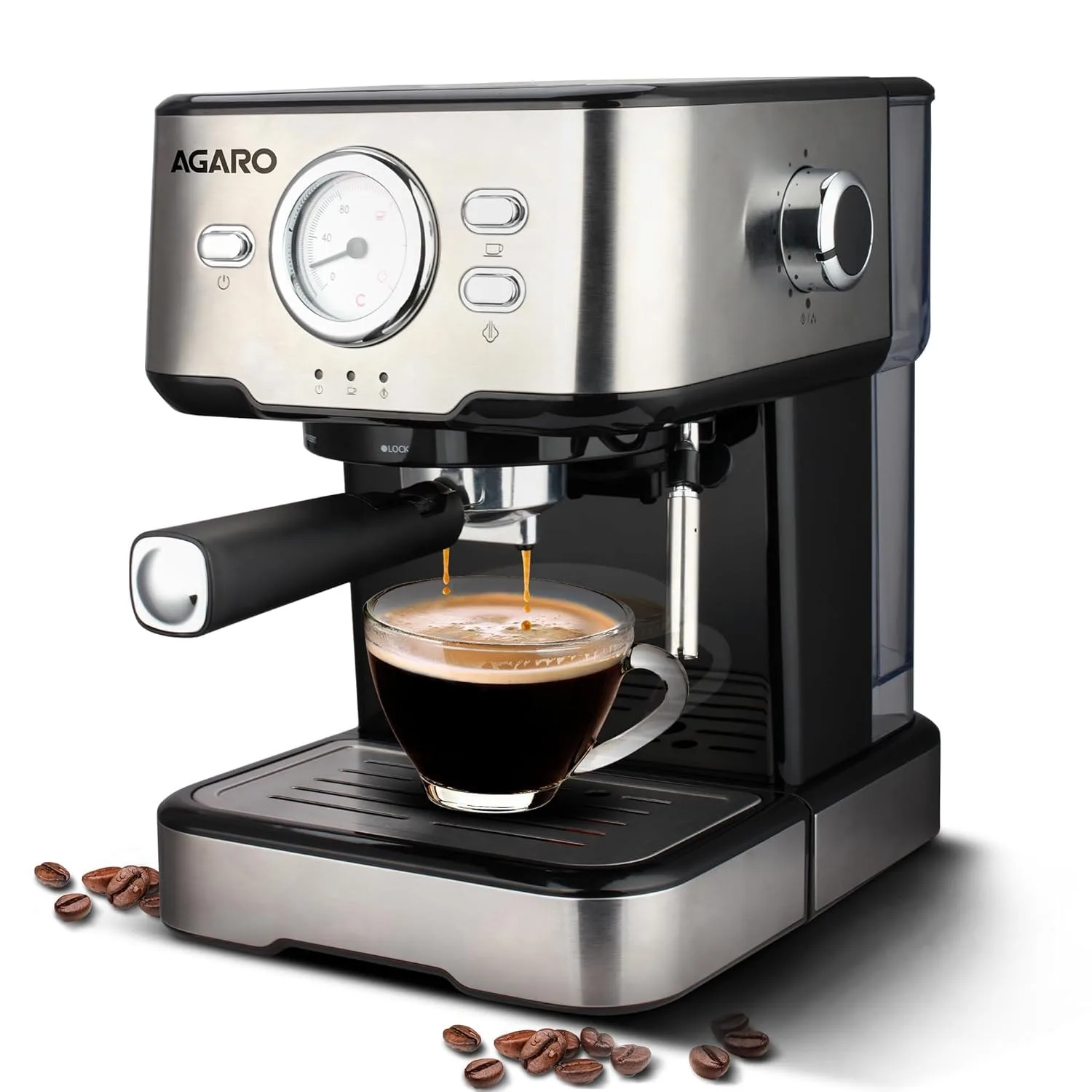
That is why the appliances that fail are so consistent: hair dryers, hair straighteners, electric kettles, toasters, clothes irons, espresso machines, room heaters and heating pads. Every one of those is a heating element with a plug.
Where the part number gives it away
Manufacturers frequently encode the market in the model number, which is faster than hunting for a rating plate on a listing photograph. Breville reserves the XL suffix for its North American machines and sells BES870BSS and BES870UK into 230 V markets — so a BES870XL is a 120 V machine regardless of who is selling it. KitchenAid, Fellow, Vitamix and Ninja all maintain separate part numbers for their 230 V variants.
Where a genuine 230 V version exists under the same product name, the sensible move is to buy that one rather than to import the American variant and solve the problem afterwards.
Why a transformer is usually the wrong answer
A step-down transformer does genuinely convert 230 V to 120 V, so in principle it solves the problem. In practice it rarely makes sense for the appliances that need it.
A transformer must be rated comfortably above the appliance wattage — the usual guidance is at least 1.5 times, because motors and heating elements draw a surge on start-up. An espresso machine drawing 1600 W therefore needs a transformer rated around 2500 W, which is a heavy, warm, expensive box that must live permanently next to the appliance.
For a 1600 W machine that transformer costs a serious fraction of the machine itself. For a toaster it is comfortably absurd. Transformers make sense for something irreplaceable that you already own and shipped with you. They do not make sense as a way to save money on a purchase you have not made yet.
Fitment: the failures nothing can fix
Voltage is at least solvable in principle. Fitment is not, and it is the category people discover after delivery.
These are products where the thing the appliance attaches to does not exist in Indian homes:
- Retrofit smart locks. The common US design clamps over a single-cylinder deadbolt. Indian doors use mortise and multipoint locks. There is no adapter — the lock physically will not mount. A mortise-cut smart lock is the product that fits here.
- Wall switch plates. The US three-gang plate is a different size and screw pitch from the Indian modular back box. Fitting one means replacing the box in the wall.
- Garage door controllers. These drive US sectional openers. Indian homes overwhelmingly have rolling shutters or swing gates, which the controller cannot operate.
- Central HVAC thermostats. These wire into 24 V control wiring with a C-wire. Indian split and window air conditioners have no such wiring, and no configuration makes a 24 V thermostat control one. An infrared bridge is the route that works here.
- Plugs with flat pins. US NEMA flat parallel pins do not enter an Indian round-pin socket, and a US-socketed smart plug will not accept an Indian plug either — so it needs an adapter at both ends, on every unit.
The useful test before ordering anything that mounts, wires in, or plugs through: ask what it attaches to, and whether that thing is standard in Indian homes. If the answer involves a deadbolt, a sectional garage door, 24 V control wiring or a US wall box, it will not work here at any price.
Certification: a legal question, not a quality one
The third category is the one most often dismissed as paperwork, and it is the one where the consequences are most serious.
Certification is not a judgement about how well a product performs. A helmet certified to SNELL M2020 has passed a demanding test. It still does not satisfy Indian law, which requires the ISI mark to IS 4151 on helmets sold here, and which is checked at enforcement rather than at purchase.
The distinctions worth knowing:
- BIS and the ISI mark. The Bureau of Indian Standards is the certifying body; the ISI mark is what it awards to a product meeting a specific Indian Standard. Helmets, electrical accessories and many appliances fall under mandatory BIS certification.
- CDSCO. A separate regulator for medical devices. A blood pressure monitor, thermometer, oximeter or nebuliser carries CDSCO registration rather than an ISI mark. An FDA-cleared device is approved for the US market and is not, by that fact, registered here.
- AIS-072. The Indian standard for child restraint systems. A car seat certified to the US FMVSS 213 is not certified to it, nor to UN R44 or R129. Beyond legality there is a mechanical problem: US seats are built around LATCH anchors and Indian cars use ISOFIX, and the standards differ on anchor spacing and top tether.
- Fire safety. A smoke or carbon monoxide alarm carrying only US UL approval cannot be relied on to meet an Indian requirement. For a life-safety device that is not a technicality.
Certification failures are the hardest to detect at the point of purchase, because the product works perfectly. Nothing goes wrong until it matters.
A checklist before you order
Four questions, in order. Any single "no" is decisive.
- What does the power brick say? 100-240 V means a plug adapter suffices. 120 V alone means a transformer or a different variant.
- Is it a heating element? If yes, assume single voltage until the rating plate proves otherwise.
- What does it physically attach to? If the answer is a deadbolt, a US wall box, a sectional garage door or 24 V HVAC wiring, stop here.
- Does the category require Indian certification? Helmets, child car seats, medical devices and fire alarms all do, and a US or European approval does not substitute.
What we withdrew, and why
Ten products left this catalogue during the compatibility audit. Listing them is more useful than describing the rule abstractly, because the failure modes are concrete:
- Voltage — a 120 V espresso machine, toaster, heating pad and ultrasonic humidifier. All four are heating or high-draw appliances at 1250 W and above.
- Fitment — a deadbolt-retrofit smart lock, a US three-gang switch plate, a sectional garage door controller, a 24 V central thermostat, and a four-pack of US-pin smart plugs.
- Certification — a Z-Wave smoke and carbon monoxide alarm carrying US UL approval and no BIS certification.
Several products stayed that a cruder rule would have removed. A Yale mortise smart lock is imported and fits Indian doors, which is its entire design premise. Ring and Nest cameras are US SKUs and are ordinary Wi-Fi devices that work here without modification. A rechargeable trimmer with a 100-240 V charger is not a voltage problem at all, whatever its part number suggests.
That is the distinction worth carrying: imported is not the problem. Single-voltage heating elements, US-specific fitment and missing Indian certification are the problems, and they are three different questions with three different answers.